Augusty: A Timeless Handwritten Font
There I was, staring at a blank brand board, trying to find the right visual voice for a new boutique coffee shop. The client wanted something warm, inviting, and a little bit personal—like the kind of place where the barista knows your name. That’s when I reached for Augusty.
The Visual Personality of Augusty
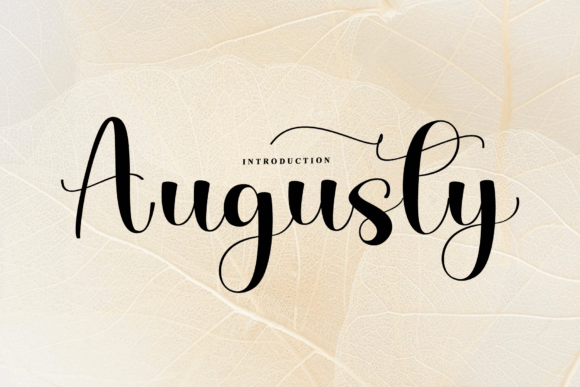
Augusty is a handwritten font with a soft, organic feel that feels both modern and nostalgic. Each letter has a subtle variation, giving it a handcrafted quality that stands out in a sea of rigid digital typefaces. It doesn’t feel overly ornate or fussy, but it carries an elegance that works well for brands looking to convey authenticity and approachability.
The strokes are smooth and flowing, with just enough character to make it memorable without being overwhelming. It’s not the kind of font you’d use for long paragraphs, but as a display or headline font, it shines. Its personality is gentle and expressive, making it ideal for logos, taglines, and branding elements that need a human touch.
Testing Augusty in Real Branding Projects
I tested Augusty on a logo draft for the coffee shop, pairing it with a clean sans serif for balance. The contrast worked beautifully—the handwritten font added warmth, while the sans serif kept things professional. On a packaging mockup, it brought a sense of craft and care, perfect for a brand that wants to communicate quality and attention to detail.
On a business card, Augusty felt natural and unpretentious. It didn’t overpower the other design elements, and its readability was solid at standard sizes. For social media graphics, it added a friendly, engaging tone that resonated well with the target audience.
When placed on a website header, Augusty gave the page a personal, curated feel. It wasn’t too flashy, but it caught the eye and made the content feel more human. In editorial design, it worked well as a subheading or title, adding visual interest without disrupting the flow of the text.
Strengths and Limitations
Augusty excels as a display or accent font. It’s best suited for short phrases, headlines, and logos where its unique character can shine. It’s not designed for body text or small sizes, where its fluidity could compromise readability. In formal or corporate settings, it might feel too casual, so it’s better reserved for creative or lifestyle brands.
For a skincare product line or a handmade shop, Augusty would be a strong choice. It conveys a sense of care and individuality that aligns well with those industries. However, if the goal is to project a more traditional or high-end image, a serif font might be more appropriate.
Font Pairing and Design Applications
Augusty pairs well with a variety of fonts, especially those that offer contrast. A simple serif font like Playfair Display or a clean sans serif like Lato can balance its organic feel. When used alongside another script font, it can create a layered, textured look that adds depth to the design.
In a creative studio identity project, Augusty could be used for the logo, while a sans serif handles the supporting text. For a bakery packaging design, it could serve as the main label, with a simpler font for ingredient lists or pricing.
When working on a local restaurant logo system, Augusty added a personal touch that felt authentic. It wasn’t too stylized, which helped maintain a sense of professionalism while still feeling approachable.
Practical Considerations
Before using Augusty in final client work, it’s always a good idea to test it in different contexts. Print a mockup, view it on various devices, and see how it looks in both light and dark environments. Pay attention to how it scales—some handwritten fonts lose clarity when resized, but Augusty maintains its character even at smaller sizes.
Check the font’s licensing terms carefully, especially if you’re planning to use it in commercial projects. Make sure it’s licensed for the intended use, whether it’s for print, web, or digital products. Some fonts have restrictions on resale or modification, so understanding the license is essential.
If you’re working with a multilingual project, verify that Augusty supports the languages you need. While many handwritten fonts are limited to Latin scripts, some include extended character sets for broader use.